
Introduction
Annual Hose Testing & Repair Services are no longer optional maintenance tasks — in 2026, they are a critical requirement for businesses aiming to meet fire safety regulations and avoid compliance penalties. Whether you operate a warehouse, factory, commercial building, or industrial facility, regular hose inspections and repairs ensure that your fire protection system performs effectively during emergencies.
With increasing regulatory scrutiny and updated compliance standards, organizations must adopt a proactive approach to Annual Hose Testing & Repair Services to protect lives, property, and operational continuity.
Why Annual Hose Testing & Repair Services Matter More in 2026
Fire safety authorities worldwide are tightening enforcement standards. Annual testing is now considered a minimum requirement, especially for high-risk facilities.
In 2026, safety compliance focuses on:
Verified hydrostatic pressure testing
Documented inspection records
Certified repair procedures
Replacement of non-compliant hoses
Digital audit trails
Failure to maintain Annual Hose Testing & Repair Services can result in fines, legal action, failed safety audits, or insurance complications.
Regular maintenance ensures:
Emergency readiness
Reduced equipment failure
Extended hose lifespan
Lower long-term costs
What Is Included in Annual Hose Testing & Repair Services?
Professional Annual Hose Testing & Repair Services typically involve a structured and documented process.
1. Comprehensive Visual Inspection
Technicians inspect each hose for:
Surface cracks and abrasions
Coupling damage
Gasket wear
Signs of corrosion
Chemical or UV exposure damage
This initial step identifies visible risks before pressure testing begins.
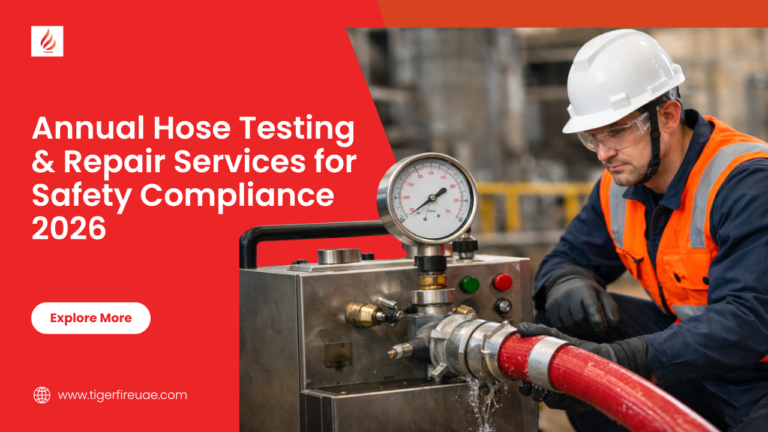
2. Hydrostatic Pressure Testing
Hydrostatic testing is the core of Annual Hose Testing & Repair Services.
The hose is filled with water and pressurized to a specific rating according to safety standards. The hose must withstand pressure without:
Leakage
Bulging
Structural distortion
Coupling slippage
If a hose fails, immediate repair or replacement is recommended.
3. Professional Hose Repair
When defects are detected, certified technicians perform:
Re-coupling of damaged ends
Gasket replacement
Sectional repairs
Post-repair pressure re-testing
All repairs must meet compliance standards in 2026 to ensure certification validity.
4. Drying and Proper Storage
Improper storage shortens hose lifespan. After testing, hoses are fully dried and stored correctly to prevent mold, corrosion, and internal lining damage.
Updated Compliance Requirements in 2026
Annual Hose Testing & Repair Services must align with updated fire safety regulations. Authorities now require:
Annual documented hydrostatic tests
Inspection logs accessible during audits
Certification from approved service providers
Replacement of expired hoses
Digital recordkeeping
Compliance documentation is no longer optional. Many inspectors request digital reports during safety audits.
Industries That Require Annual Hose Testing & Repair Services
In 2026, several industries face strict enforcement:
Industrial manufacturing facilities
Oil & gas plants
Warehouses and logistics centers
Hotels and commercial towers
Hospitals and healthcare facilities
Educational institutions
Construction sites
If your business handles flammable materials, heavy machinery, or large public occupancy, Annual Hose Testing & Repair Services are mandatory.
Common Issues Found During Annual Hose Inspections
Routine Annual Hose Testing & Repair Services often uncover hidden problems such as:
Internal lining deterioration
Pressure weakness
Burst risks
Coupling corrosion
Chemical exposure damage
Dry rot
Early detection prevents emergency failures and reduces overall repair costs.
Repair vs Replacement: Making the Right Decision
Not all hoses require full replacement. In 2026, sustainability and cost-efficiency influence maintenance decisions.
A hose may be repaired if:
Damage is localized
Pressure rating can be restored
Couplings remain intact
Replacement is necessary if:
The hose fails hydrostatic testing
Structural damage is extensive
It exceeds manufacturer lifespan
Compliance standards require removal
Professional Annual Hose Testing & Repair Services help determine the safest option.
The Role of Technology in 2026 Hose Testing
Modern Annual Hose Testing & Repair Services now incorporate advanced technology such as:
Automated pressure monitoring systems
Digital inspection tablets
QR-coded hose tracking
Cloud-based compliance storage
Predictive maintenance analytics
These tools improve transparency and streamline audit processes.
How Often Should Hoses Be Tested?
In 2026, the recommended schedule includes:
Annual hydrostatic testing (mandatory)
Monthly visual inspections
Post-use inspections after emergencies
Immediate testing after repairs
Building Annual Hose Testing & Repair Services into your preventive maintenance plan ensures year-round readiness.
Benefits of Professional Annual Hose Testing & Repair Services
Partnering with certified service providers offers:
Guaranteed compliance
Reduced liability risks
Detailed inspection reports
Insurance approval
Improved emergency response reliability
Extended equipment lifespan
DIY testing or uncertified repairs can invalidate compliance certification.
Cost Factors in 2026
The cost of Annual Hose Testing & Repair Services depends on:
Number of hoses
Hose diameter and length
Required repairs
Industry risk level
Emergency vs scheduled testing
However, annual preventive maintenance is significantly more affordable than replacing failed systems after an incident.
Preparing for a Fire Safety Audit in 2026
To ensure audit success:
Maintain updated inspection records
Schedule testing before compliance deadlines
Replace expired hoses
Store equipment properly
Keep digital documentation accessible
Work with certified Annual Hose Testing & Repair Services providers
Being proactive prevents last-minute compliance issues.
Why Skipping Annual Hose Testing Is Risky
Ignoring Annual Hose Testing & Repair Services can lead to:
Equipment failure during emergencies
Severe property damage
Insurance claim rejection
Legal consequences
Operational shutdown
Fire hoses are critical life-saving equipment — failure is not an option.
The Future of Annual Hose Testing & Repair Services
As fire safety standards continue to evolve, compliance expectations will only increase. In 2026 and beyond, Annual Hose Testing & Repair Services will become more data-driven, technology-enabled, and audit-focused.
Businesses that invest in routine testing today gain:
Long-term cost savings
Stronger safety culture
Reduced risk exposure
Enhanced regulatory compliance
Conclusion
Annual Hose Testing & Repair Services for Safety Compliance 2026 are a fundamental responsibility for any organization committed to protecting lives and assets. With stricter regulations, advanced testing technologies, and growing enforcement, businesses must treat annual hose testing as a strategic priority rather than a routine checklist task.
Regular inspections, certified repairs, digital documentation, and proactive maintenance planning ensure your facility remains compliant, safe, and fully prepared for emergencies.
If your hoses have not been tested recently, now is the time to schedule your Annual Hose Testing & Repair Services and secure your compliance for 2026 and beyond.