
Introduction
Fire safety is a critical requirement for commercial buildings, industrial facilities, residential properties, and public spaces. When discussing fire safety solutions, two terms are often used interchangeably: fire detection systems and fire protection systems. However, while both are essential for safety, they serve different purposes in preventing loss of life and property damage.
Understanding the difference between fire detection and fire protection systems can help property owners, facility managers, and business operators choose the right safety solutions for their buildings. Together, these systems create a comprehensive fire safety strategy that helps detect, control, and minimize the impact of fire emergencies.
1. What Are Fire Detection Systems?
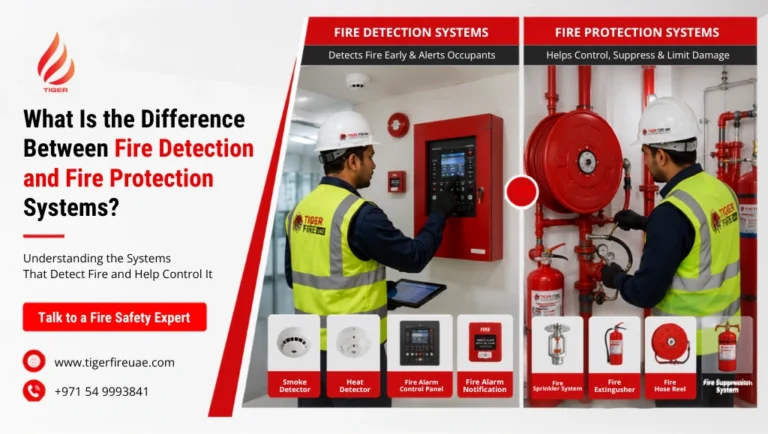
Fire detection systems are designed to identify the early signs of a fire and alert building occupants before the situation becomes dangerous. Their primary goal is to provide early warning so people can evacuate safely and emergency responders can act quickly.
Fire detection systems typically monitor:
- Smoke
- Heat
- Flames
- Carbon monoxide
- Environmental changes associated with fire
Early detection is crucial because it allows immediate action before a fire spreads.
2. What Are Fire Protection Systems?
Fire protection systems are designed to control, suppress, or extinguish a fire once it has been detected. These systems help minimize damage to property, protect occupants, and prevent fire from spreading throughout a building.
Fire protection systems include:
- Fire sprinklers
- Fire extinguishers
- Fire suppression systems
- Fire hydrants
- Fire hose reels
- Fire pumps
Their purpose is to actively respond to a fire and reduce its impact.
3. The Main Difference Between Fire Detection and Fire Protection Systems
The key difference between fire detection and fire protection systems lies in their function.
Fire Detection Systems:
- Detect fire hazards
- Alert occupants
- Trigger alarms
- Support evacuation
Fire Protection Systems:
- Control or extinguish fires
- Reduce property damage
- Prevent fire spread
- Assist firefighting efforts
In simple terms, fire detection systems warn people about a fire, while fire protection systems help fight the fire.
4. Components of Fire Detection Systems
Modern fire detection systems use advanced technologies to identify fire risks quickly and accurately.
Common components include:
- Smoke detectors
- Heat detectors
- Flame detectors
- Manual call points
- Fire alarm control panels
- Sounders and sirens
These devices work together to provide rapid alerts during emergencies.
5. Components of Fire Protection Systems
Fire protection systems consist of equipment designed to suppress or contain fire.
Common components include:
- Automatic sprinkler systems
- Fire extinguishers
- Fire suppression agents
- Fire pumps
- Water storage tanks
- Hydrant systems
Each component plays a specific role in controlling fire and protecting people and assets.
6. Why Fire Detection Systems Are Important
Fire detection systems are the first line of defense in a fire emergency. The sooner a fire is detected, the greater the chance of preventing injuries and reducing damage.
Benefits include:
- Early warning notifications
- Faster evacuation
- Reduced panic
- Improved emergency response
- Enhanced life safety
Without early detection, occupants may not have enough time to react.
7. Why Fire Protection Systems Are Essential
Even with early detection, fires can spread rapidly. Fire protection systems help control the situation until emergency responders arrive.
Key advantages include:
- Fire suppression capabilities
- Reduced property damage
- Business continuity protection
- Improved occupant safety
- Compliance with safety regulations
These systems significantly reduce the impact of fire incidents.
8. How Fire Detection and Fire Protection Systems Work Together
The most effective fire safety strategy combines both detection and protection systems.
A typical sequence may include:
- Smoke detector identifies smoke.
- Fire alarm activates.
- Occupants receive evacuation alerts.
- Sprinkler system activates automatically.
- Fire suppression equipment controls the fire.
- Emergency responders arrive.
This integrated approach provides comprehensive protection.
9. Industries That Require Both Systems
Many industries depend on both fire detection and fire protection systems to meet safety requirements.
Examples include:
- Commercial offices
- Shopping malls
- Warehouses
- Hotels
- Hospitals
- Manufacturing facilities
- Educational institutions
These environments often contain large numbers of occupants and valuable assets that require comprehensive fire protection.
10. Choosing the Right Fire Safety Solution
Selecting the right fire safety systems depends on several factors, including building size, occupancy, operational risks, and regulatory requirements.
Consider:
- Building type
- Fire hazards present
- Occupancy levels
- Civil Defense requirements
- Future expansion needs
Working with experienced fire safety professionals ensures your facility receives the most suitable protection.
Conclusion
Understanding the difference between fire detection and fire protection systems is essential for creating a safe and compliant environment. While fire detection systems focus on identifying fire hazards and providing early warnings, fire protection systems actively work to suppress and control fires, reducing their impact on people and property.
Neither system should be viewed as a standalone solution. The most effective fire safety strategy combines both detection and protection technologies to provide comprehensive coverage. From smoke detectors and alarm panels to sprinklers and fire suppression systems, each component plays a crucial role in protecting lives, assets, and business operations.
By investing in both fire detection and fire protection systems, property owners and businesses can improve emergency preparedness, enhance safety, meet regulatory requirements, and gain peace of mind knowing they are prepared for unexpected fire incidents.