
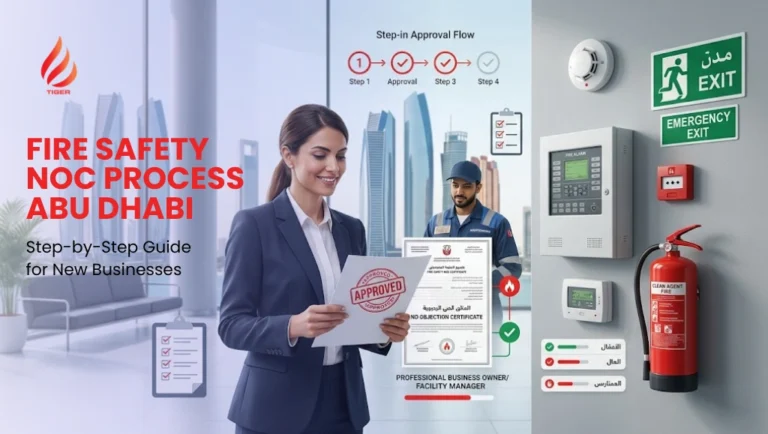
Introduction
Starting a new business in Abu Dhabi involves more than securing a trade license and setting up operations. One of the most critical requirements for commercial establishments is obtaining the necessary fire safety approvals before opening to the public. The Fire Safety NOC Process Abu Dhabi businesses must follow helps ensure that buildings, occupants, and assets are protected against fire-related risks.
A Fire Safety No Objection Certificate (NOC) confirms that a facility complies with applicable fire protection and life safety requirements. Whether you are launching a retail store, office, warehouse, restaurant, hotel, healthcare facility, or industrial unit, obtaining fire safety approval is often an essential step in the business setup process.
Understanding the Fire Safety NOC Process Abu Dhabi entrepreneurs and business owners need to follow can help avoid costly delays, failed inspections, and compliance issues. This guide explains the process step by step and highlights the importance of proper fire safety planning for new businesses.
What Is a Fire Safety NOC and Why Is It Important?
A Fire Safety NOC is an official approval indicating that a building or commercial facility has met the required fire protection and life safety standards. It demonstrates that appropriate fire prevention, detection, and emergency response measures have been implemented.
For new businesses, obtaining fire safety clearance is not merely a regulatory formality. It is a critical step toward protecting employees, customers, visitors, and business assets.
Key Benefits of a Fire Safety NOC
- Supports legal and regulatory compliance
- Enhances workplace safety
- Reduces fire-related risks
- Improves emergency preparedness
- Helps protect business investments
The Fire Safety NOC Process Abu Dhabi serves as a safeguard that promotes safer commercial environments across the emirate.
Which Businesses Need Fire Safety Approval?
Most commercial and industrial facilities require fire safety approvals before commencing operations. The specific requirements may vary depending on the nature of the business, building size, occupancy type, and associated fire risks.
Businesses commonly requiring fire safety approvals include:
Commercial Facilities
- Offices
- Retail stores
- Shopping centers
- Hotels
- Restaurants
- Educational institutions
Industrial Facilities
- Warehouses
- Manufacturing plants
- Logistics centers
- Workshops
- Storage facilities
The Fire Safety NOC Process Abu Dhabi applies to a wide range of sectors and plays a vital role in ensuring public safety.
Step 1: Conduct a Fire Risk Assessment
The first stage of the process involves evaluating the fire risks associated with the property and business operations.
A fire risk assessment helps identify potential hazards such as:
- Electrical equipment
- Flammable materials
- Fuel storage
- Cooking operations
- High-occupancy areas
The findings from the assessment help determine the fire protection measures required for the facility.
Why This Step Matters
A proper assessment ensures that the fire safety system design aligns with the specific risks present within the property. This reduces the likelihood of future compliance issues and inspection failures.
Step 2: Develop Fire Safety System Designs
Once fire risks have been identified, the next stage involves designing suitable fire protection systems.
The design typically includes plans for:
Fire Protection Components
- Fire alarm systems
- Smoke detectors
- Emergency lighting
- Fire extinguishers
- Fire suppression systems
- Sprinkler systems
- Exit signage
The complexity of the design depends on the building’s size, occupancy type, and operational activities.
For many businesses, professional fire protection specialists are engaged to prepare compliant system layouts and technical documentation.
Step 3: Submit Required Documentation
The next stage in the Fire Safety NOC Process Abu Dhabi involves submitting the required documentation for review.
Documentation requirements may vary depending on the project type, but commonly include:
Required Documents
- Building drawings
- Fire protection layouts
- Trade license information
- Site plans
- Technical specifications
- Risk assessment reports
- Equipment details
Providing complete and accurate documentation can significantly reduce approval delays and improve processing efficiency.
Step 4: Install Approved Fire Protection Systems
After receiving design approval, businesses can proceed with system installation.
Fire safety equipment must be installed according to approved plans and applicable standards.
Common Installations Include
- Fire alarm control panels
- Smoke and heat detectors
- Manual call points
- Fire extinguishers
- Sprinkler systems
- Emergency lighting
- Fire pumps
Proper installation is essential because even high-quality equipment may fail inspections if not installed correctly.
Businesses should ensure that installation work is carried out by qualified fire safety professionals.
Step 5: Testing and Commissioning of Fire Safety Systems
Before inspection can take place, all fire protection systems must undergo testing and commissioning.
This process verifies that every component functions as intended and integrates correctly with the overall safety infrastructure.
Testing Activities May Include
- Alarm activation testing
- Detector sensitivity checks
- Emergency lighting verification
- Sprinkler system testing
- Fire pump performance evaluation
- System communication checks
Thorough testing helps identify potential issues before official inspections occur.
Step 6: Fire Safety Inspection and Verification
One of the most important stages of the Fire Safety NOC Process Abu Dhabi is the site inspection.
Inspectors assess whether the installed systems comply with approved designs and fire safety requirements.
Inspection Areas Typically Include
- Fire alarm functionality
- Detector placement
- Emergency exits
- Fire extinguisher locations
- Emergency lighting
- System maintenance records
- Occupant safety provisions
If deficiencies are identified, corrective actions may be required before approval can be granted.
Businesses that prepare thoroughly for inspections are more likely to achieve successful outcomes without delays.
Common Reasons for Approval Delays
Many businesses experience delays because of avoidable mistakes during the fire safety approval process.
Understanding these challenges can help organizations plan more effectively.
Common Issues Include
- Incomplete documentation
- Incorrect system design
- Improper equipment installation
- Missing emergency signage
- Poor maintenance records
- Non-compliant fire protection layouts
Addressing these issues proactively can streamline the Fire Safety NOC Process Abu Dhabi and reduce project timelines.
Best Practices
- Work with experienced fire safety professionals
- Review documentation carefully
- Conduct internal inspections
- Test systems thoroughly before official review
Step 7: Obtaining the Fire Safety NOC and Maintaining Compliance
After successfully completing inspections and satisfying all requirements, the Fire Safety NOC can be issued.
However, compliance does not end once approval is obtained. Businesses must continue maintaining fire protection systems to ensure ongoing safety and regulatory compliance.
Ongoing Compliance Responsibilities
- Regular fire alarm maintenance
- Fire extinguisher servicing
- Emergency lighting inspections
- Staff fire safety training
- Routine fire drills
- System performance testing
Maintaining compliance helps ensure that fire protection systems remain operational and effective throughout the life of the facility.
Organizations that prioritize ongoing fire safety management are better prepared to protect their employees, customers, and assets.
Conclusion
The Fire Safety NOC Process Abu Dhabi is an essential part of establishing a safe and compliant business environment. From conducting fire risk assessments and designing fire protection systems to installation, testing, inspections, and final approval, every step contributes to protecting lives and property.
For new businesses, understanding the process early can prevent costly delays and simplify the path toward operational readiness. By investing in proper fire safety planning and working with qualified professionals, organizations can meet regulatory requirements while building a safer future for employees, customers, and stakeholders.
Obtaining a Fire Safety NOC is not just about compliance—it is a commitment to safety, responsibility, and long-term business resilience.