
Introduction
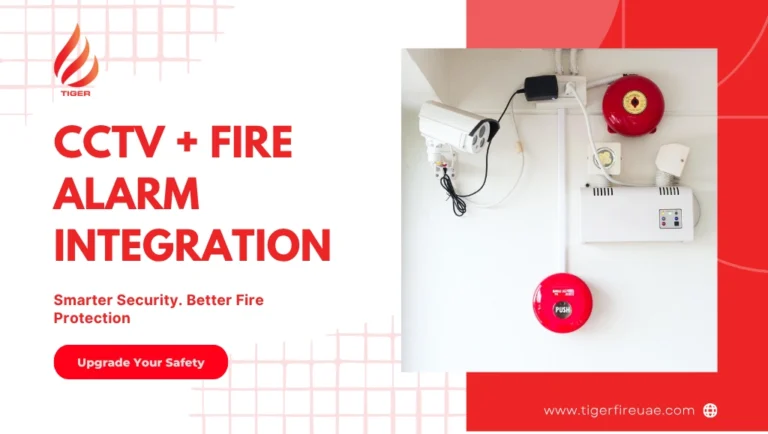
Traditionally, fire alarm systems and CCTV surveillance have operated as two separate layers of building security, one focused on fire detection, the other on monitoring and surveillance. However, as building safety technology advances, more businesses in Abu Dhabi are recognizing the value of integrating these systems into a single, unified safety solution.
CCTV and fire alarm integration allows for faster response times, better situational awareness, and stronger overall protection for both people and property. In this guide, we explore how this integration works and why it’s becoming an essential upgrade for modern buildings.
What Is CCTV and Fire Alarm Integration?
Integration means connecting your fire detection system with your CCTV surveillance network so that both systems can communicate and respond together during an emergency. Rather than operating in isolation, an integrated system allows fire alarm triggers to automatically activate relevant camera feeds, alert security personnel, and provide real-time visual confirmation of an incident as it unfolds.
How the Integration Works
When a fire alarm sensor, such as a smoke detector or heat sensor, is triggered, an integrated system can automatically:
- Direct nearby CCTV cameras to the affected zone
- Send real-time alerts with live video feeds to security personnel or building management
- Record and timestamp footage of the incident for later review
- Trigger additional safety protocols, such as unlocking emergency exits or notifying emergency services
This automated response eliminates delays that can occur when systems operate independently and staff must manually cross-reference alarms with camera footage.
Key Benefits of CCTV and Fire Alarm Integration
1. Faster Emergency Response
When an alarm is triggered, security or facility staff can immediately view live footage of the affected area without needing to physically investigate first. This allows for a faster, more informed response, whether that means dispatching personnel, evacuating a specific zone, or contacting emergency services with accurate information.
2. Reduced False Alarm Confusion
Fire alarms can sometimes be triggered by non-fire events, such as dust, steam, or malfunctioning sensors. With integrated CCTV, staff can quickly verify whether an alarm reflects an actual fire or a false trigger, reducing unnecessary evacuations and emergency service callouts.
3. Improved Situational Awareness
Integrated systems provide a clearer picture of what’s happening during an emergency. Security teams can monitor the spread of smoke or fire, track occupant movement during evacuation, and identify any obstacles or hazards in real time.
4. Centralized Monitoring and Control
Rather than managing separate systems and interfaces, integration allows fire and security systems to be monitored from a single centralized platform. This simplifies daily operations and ensures nothing is overlooked during a critical event.
5. Stronger Evidence and Documentation
Recorded footage tied directly to fire alarm events creates a valuable record for post-incident investigations, insurance claims, and compliance reporting. This documentation can clarify the cause, timeline, and response effectiveness of any fire-related incident.
6. Enhanced Building Security Beyond Fire Events
Beyond fire safety, integrated systems often extend to broader building security functions, such as linking fire alarms with access control to automatically unlock doors along evacuation routes, improving safety during emergencies of any kind.
Ideal Applications for Integrated Systems
CCTV and fire alarm integration is particularly valuable for:
- Commercial buildings and offices with multiple floors or zones
- Warehouses and industrial facilities where fire risks are higher and response speed is critical
- Retail spaces and shopping centers with high occupancy and complex layouts
- Residential towers requiring coordinated evacuation and monitoring
- Hotels and hospitality venues where guest safety and rapid response are top priorities
Considerations Before Integrating Systems
While the benefits are significant, successful integration requires careful planning:
- Compatibility between existing fire alarm and CCTV systems, or planning for compatible replacements
- Professional installation by experienced technicians familiar with both fire safety and surveillance technology
- Compliance with Abu Dhabi Civil Defense regulations for fire systems, even when integrated with additional technology
- Regular testing and maintenance to ensure both systems continue to function correctly together over time
Conclusion
Integrating CCTV and fire alarm systems transforms two separate safety tools into a coordinated, intelligent response network. The result is faster reaction times, better decision-making during emergencies, and stronger overall protection for occupants and property.
Tiger Fire for Security System designs and installs integrated fire safety and surveillance solutions tailored to commercial, residential, and industrial properties across Abu Dhabi. Contact our team today to learn how integration can strengthen your building’s safety infrastructure.