
Introduction
Modern buildings face a wide range of safety challenges, from fire emergencies and unauthorized access to security breaches and operational risks. Managing these threats through separate systems can create delays, inefficiencies, and gaps in protection. This is why many businesses, commercial properties, residential complexes, and industrial facilities are investing in Integrated Fire and Security Systems.
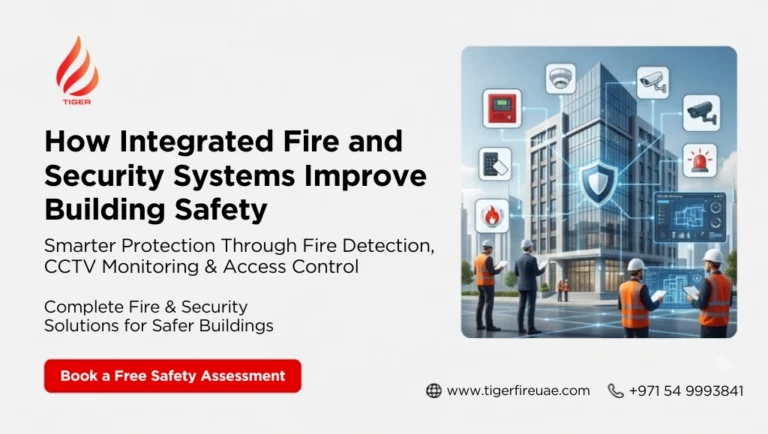
An integrated system combines fire alarms, access control, CCTV surveillance, intrusion detection, emergency communication, and monitoring solutions into a single platform. This approach improves response times, enhances situational awareness, and helps property owners maintain a safer environment. Understanding how integrated fire and security systems improve building safety can help organizations make smarter investments in comprehensive protection.
1. What Are Integrated Fire and Security Systems?
Integrated fire and security systems combine multiple safety technologies into one centralized management platform. Instead of operating independently, these systems communicate with each other and share real-time information.
Common components include:
- Fire alarm systems
- CCTV surveillance cameras
- Access control systems
- Intrusion detection systems
- Emergency lighting systems
- Public address systems
- Building management systems
This integration improves coordination during emergencies and daily operations.
2. Faster Emergency Response Times
One of the biggest benefits of integrated fire and security systems is faster emergency response. When a fire alarm is triggered, connected systems can immediately respond without manual intervention.
Examples include:
- Automatic alarm activation
- Instant security notifications
- Real-time CCTV verification
- Emergency communication alerts
- Faster evacuation procedures
Quick response can significantly reduce risks and damage.
3. Real-Time Monitoring and Control
Integrated systems provide centralized monitoring through a single control platform. Security teams can view and manage all safety systems from one location.
Key advantages include:
- Live incident monitoring
- Immediate threat identification
- Faster decision-making
- Improved operational efficiency
- Better emergency coordination
Real-time visibility helps security personnel respond more effectively.
4. Improved Fire Detection and Notification
Fire detection becomes more effective when integrated with other building safety systems.
Benefits include:
- Faster fire identification
- Automated emergency alerts
- Instant communication with occupants
- Enhanced evacuation management
- Reduced response delays
Early detection remains one of the most important aspects of fire safety.
5. Enhanced Access Control During Emergencies
Access control systems can play a critical role during fire incidents and security threats.
Integrated systems can:
- Unlock emergency exits automatically
- Restrict access to hazardous areas
- Guide occupants toward safe evacuation routes
- Assist emergency responders
- Improve crowd management
This functionality helps maintain safety during critical situations.
6. Better CCTV Surveillance Integration
Security cameras provide valuable information during emergencies. When integrated with fire and security systems, surveillance footage can support faster incident assessment.
Advantages include:
- Visual verification of alarms
- Identification of affected areas
- Monitoring evacuation routes
- Enhanced emergency response
- Improved incident investigations
CCTV integration adds another layer of protection and awareness.
7. Reduced False Alarms
False alarms can disrupt operations, create unnecessary evacuations, and increase costs. Integrated systems help improve alarm accuracy.
This is achieved through:
- Cross-system verification
- Advanced monitoring technologies
- Intelligent event analysis
- Real-time data sharing
- Improved threat assessment
Reducing false alarms improves overall operational efficiency.
8. Stronger Protection for Commercial Buildings
Commercial properties often have complex safety requirements involving multiple systems and large numbers of occupants.
Integrated solutions help protect:
- Office buildings
- Shopping malls
- Hotels
- Educational facilities
- Healthcare institutions
Comprehensive protection improves safety and business continuity.
Conclusion
Understanding how integrated fire and security systems improve building safety highlights the importance of adopting a unified approach to protection. By combining fire alarms, CCTV surveillance, access control, emergency communication, and monitoring technologies into a single platform, organizations can improve emergency response, reduce risks, and enhance operational efficiency.
Integrated systems provide faster incident detection, better situational awareness, improved occupant safety, and stronger protection for assets and infrastructure. They also help businesses meet regulatory requirements while simplifying safety management across multiple locations and facilities.
As buildings become more connected and security challenges continue to evolve, integrated fire and security systems offer a smarter, more proactive approach to safety. Whether for commercial, industrial, healthcare, hospitality, or residential environments, these solutions play a vital role in creating safer and more resilient buildings.