
Introduction
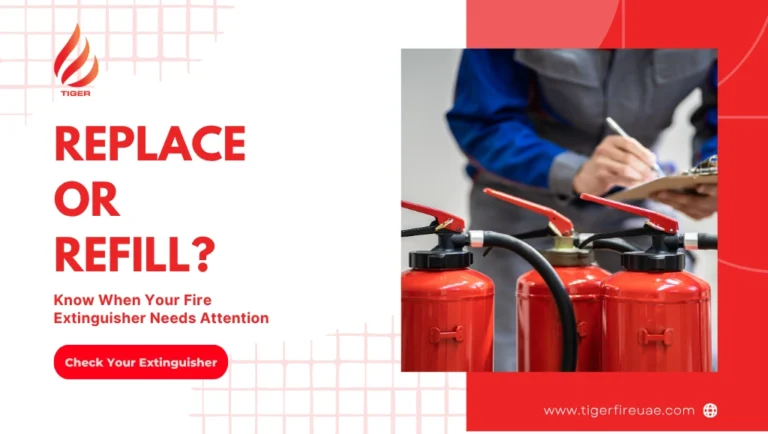
A fire extinguisher is one of the most important pieces of safety equipment in any home, office, or industrial facility. But simply having one installed is not enough — it must be in proper working condition to function when it matters most. Many property owners assume that once a fire extinguisher is installed, it will remain ready for use indefinitely. In reality, extinguishers degrade over time, lose pressure, and can become unreliable if not inspected and serviced regularly.
Knowing the warning signs that indicate your fire extinguisher needs replacement or refilling can be the difference between a controlled situation and a dangerous emergency. In this guide, we outline the key signs to watch for and explain why regular servicing is essential for compliance and safety in the UAE.
Why Fire Extinguisher Condition Matters
Fire extinguishers rely on pressurized agents to discharge effectively. Over time, seals can weaken, pressure can drop, and internal components can corrode. A faulty extinguisher may fail to discharge at all, discharge with reduced force, or malfunction entirely — putting lives and property at serious risk during a fire emergency.
Abu Dhabi Civil Defense requires that fire extinguishers be inspected, tested, and maintained on a regular schedule to ensure they remain functional and compliant.
Key Signs Your Fire Extinguisher Needs Attention
1. The Pressure Gauge Is Outside the Green Zone
Most fire extinguishers have a pressure gauge with a marked green zone indicating normal operating pressure. If the needle falls into the red zone on either side — too low or too high — the extinguisher is not functioning correctly and needs immediate servicing or refilling.
2. Visible Corrosion, Rust, or Damage
Inspect the cylinder body, hose, nozzle, and handle for signs of rust, dents, or corrosion. Physical damage can weaken the extinguisher’s structural integrity and cause it to fail or leak under pressure. Any visible damage is a clear sign the unit needs replacement.
3. The Safety Pin or Tamper Seal Is Broken or Missing
The safety pin and tamper seal indicate whether an extinguisher has been used or accessed since its last inspection. A broken seal or missing pin means the unit may have been discharged, even partially, and should be checked and refilled before being relied upon again.
4. It Has Passed Its Expiry or Service Date
Fire extinguishers are not designed to last forever. Most units have a recommended service life, after which the extinguishing agent, seals, and internal components should be inspected or replaced. Check the manufacturer’s label for the expiry or last service date, and ensure it aligns with UAE fire safety inspection intervals.
5. Dents, Leaks, or Corrosion on the Cylinder
Even small dents or signs of leaking can compromise an extinguisher’s ability to hold pressure safely. If you notice moisture around the base, a hissing sound, or a drop in weight compared to a full unit, it’s time to have it inspected by a professional.
6. The Extinguishing Agent Has Clumped or Hardened
For dry chemical extinguishers, the powder inside can settle, clump, or harden over time, especially if the unit hasn’t been shaken or serviced regularly. This prevents even discharge of the agent and reduces firefighting effectiveness. A hardened agent is a strong sign the extinguisher needs to be serviced or refilled.
7. It Has Been Used, Even Partially
Any extinguisher that has been discharged, even briefly, loses pressure and should never be considered ready for reuse until it has been professionally refilled and pressure-tested. Never place a partially used extinguisher back into service without proper servicing.
Why Regular Servicing Is Non-Negotiable
Beyond individual warning signs, fire extinguishers should be inspected on a scheduled basis, regardless of visible condition. Routine servicing ensures:
- Compliance with Abu Dhabi Civil Defense regulations
- Verified pressure levels and agent effectiveness
- Early detection of corrosion, leaks, or wear
- Documented inspection records for audits and insurance purposes
Businesses in particular are required to maintain compliant, regularly serviced fire extinguishers as part of their fire safety obligations. Failing an inspection due to neglected equipment can result in penalties and, more importantly, unnecessary safety risks.
What to Do If You Notice These Signs
If your fire extinguisher shows any of the signs above, do not attempt to repair, refill, or dispose of it yourself. Fire extinguishers contain pressurized components that require professional handling. Instead:
- Take the unit out of active service immediately.
- Replace it temporarily with a functioning extinguisher if required for compliance.
- Contact a certified fire safety provider to inspect, refill, hydro test, or replace the unit as needed.
Conclusion
Your fire extinguisher is only as reliable as its last inspection. Recognizing the signs of wear, damage, or reduced pressure can prevent equipment failure during a real emergency and keep your property compliant with UAE fire safety standards.
Tiger Fire for Security System provides professional fire extinguisher servicing, refilling, and hydro testing across Abu Dhabi for residential, commercial, and industrial properties. Contact our team today to schedule an inspection and ensure your fire extinguishers are ready when you need them most.