
Introduction
The hospitality industry is built on providing comfort, security, and exceptional experiences for guests. However, ensuring guest safety goes beyond excellent service—it also requires effective fire prevention and emergency preparedness. Hotels, resorts, serviced apartments, and hospitality venues accommodate large numbers of guests daily, making fire safety a top priority.
Implementing the right fire protection measures helps reduce risks, protect lives, safeguard property, and maintain compliance with UAE Civil Defense regulations. By following proven Fire Safety Tips for Hotels and Hospitality Businesses in Abu Dhabi, hotel owners and facility managers can create a safer environment for guests, employees, and visitors while protecting their reputation and business operations.
1. Install Reliable Fire Alarm Systems
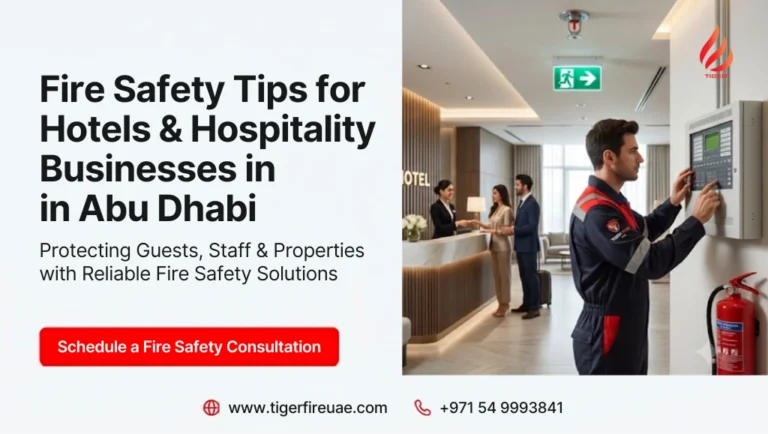
Early fire detection is essential in hotels where guests may be unfamiliar with building layouts and emergency exits. A reliable fire alarm system provides immediate alerts, allowing occupants to respond quickly during emergencies.
Best Practices:
- Install smoke and heat detectors throughout the property
- Ensure alarms are audible in all guest rooms
- Test alarm systems regularly
- Maintain backup power sources
- Schedule professional inspections
2. Maintain Fire Extinguishers in Accessible Locations
Fire extinguishers are one of the most important fire safety tools in any hospitality facility. They should be strategically placed in key areas and maintained regularly.
Recommended Locations:
- Hotel corridors
- Reception areas
- Kitchens
- Laundry rooms
- Storage facilities
Regular inspections help ensure extinguishers remain operational and compliant.
3. Conduct Regular Fire Safety Training
Employees play a critical role during fire emergencies. Proper training ensures staff can respond quickly and confidently while assisting guests.
Training Topics:
- Fire extinguisher usage
- Evacuation procedures
- Emergency communication
- Hazard identification
- Guest assistance protocols
Well-trained staff can significantly improve emergency response outcomes.
4. Keep Emergency Exits Clear at All Times
Blocked exits can create serious safety risks during emergencies. Hotels should ensure all escape routes remain accessible and clearly marked.
Important Measures:
- Remove obstacles from exit paths
- Maintain illuminated exit signs
- Inspect stairwells regularly
- Verify door functionality
- Ensure guests can easily identify exits
Clear evacuation routes improve safety and reduce panic.
5. Install Emergency Lighting Systems
Power failures often accompany fire emergencies. Emergency lighting systems help guide occupants safely to exits when normal lighting is unavailable.
Benefits Include:
- Improved visibility
- Faster evacuations
- Reduced panic
- Safer movement through corridors
- Enhanced emergency preparedness
Regular testing ensures emergency lighting remains fully functional.
6. Prioritize Commercial Kitchen Fire Safety
Hotel kitchens are among the highest-risk areas for fire incidents due to cooking equipment, open flames, and grease accumulation.
Kitchen Fire Prevention Tips:
- Clean exhaust systems regularly
- Install kitchen fire suppression systems
- Inspect cooking equipment frequently
- Train kitchen staff on fire safety procedures
- Store flammable materials safely
Effective kitchen fire protection helps reduce operational risks.
7. Implement Routine Fire Safety Inspections
Regular inspections help identify potential hazards before they become serious threats.
Areas to Inspect:
- Fire alarm systems
- Sprinkler systems
- Fire extinguishers
- Electrical equipment
- Emergency exits
Preventive inspections help maintain compliance and improve safety performance.
8. Develop a Comprehensive Emergency Evacuation Plan
Every hospitality property should have a clearly documented emergency response plan.
Key Components:
- Evacuation procedures
- Assembly points
- Staff responsibilities
- Emergency contact information
- Communication protocols
Guests and employees should understand evacuation procedures before emergencies occur.
9. Partner with a Professional Fire Safety Company
Professional fire safety providers help hotels maintain compliance, improve preparedness, and ensure fire protection systems remain effective.
Services Typically Include:
- Fire system installation
- Routine maintenance
- Compliance inspections
- Staff training
- Emergency support
Working with experienced fire safety specialists helps hospitality businesses maintain the highest safety standards.
Conclusion
Implementing effective Fire Safety Tips for Hotels and Hospitality Businesses in Abu Dhabi is essential for protecting guests, employees, and valuable property. From installing reliable fire alarm systems and maintaining fire extinguishers to conducting staff training and ensuring emergency exits remain accessible, every fire safety measure contributes to a safer hospitality environment.
Hotels and hospitality businesses face unique fire safety challenges due to high occupancy levels, commercial kitchens, and continuous operations. By prioritizing prevention, maintenance, emergency planning, and compliance, property owners can significantly reduce risks while improving guest confidence and operational resilience.
Investing in comprehensive fire protection systems and professional fire safety services not only supports regulatory compliance but also demonstrates a commitment to safety and excellence. For hospitality businesses in Abu Dhabi, proactive fire safety management is a critical part of delivering a secure and successful guest experience.