Introduction
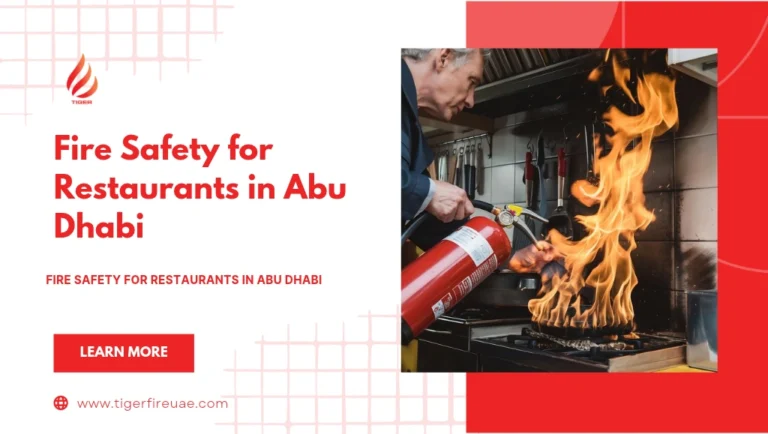
A restaurant kitchen has everything a fire needs: high heat, hot oil, open flames, electrical equipment and a lot of people working fast. That is why fire safety for restaurants is not something to think about only after an inspection notice arrives. One spilled pan of oil or one dirty exhaust duct can close your business for weeks, and in the worst case, put your staff and guests in danger.
If you run a restaurant, cafe, cloud kitchen or catering unit in Abu Dhabi, this guide will help. We explain the most common kitchen fire risks, the systems you need, and the simple habits that keep your team safe.
Why Kitchens Are So Prone to Fire
Commercial kitchens are one of the most common places for fires to start in a food business. The reason is simple. Cooking creates heat and grease every single day, and both build up quietly in places nobody looks at.
The most common causes are:
- Grease buildup in hoods, filters and exhaust ducts
- Cooking oil fires from fryers and pans that overheat
- Gas leaks from loose pipes, valves or connections
- Electrical faults from overloaded sockets and worn cables
- Unattended cooking during busy hours or shift changes
- Poor storage of flammable items such as cartons, cloths and cleaning products
A fire that begins on the cooking line can travel into the exhaust duct within seconds, and from there to the ceiling and the rest of the building. This is why kitchens need protection that works fast, even before anyone can reach an extinguisher.
The Fire Protection Systems Every Commercial Kitchen Needs
Good fire safety for restaurants is built in layers. No single product is enough on its own. Here are the main parts.
1. Kitchen Hood Fire Suppression System
This is the most important system in any commercial kitchen. Nozzles are fitted above the cooking equipment and inside the hood and duct. When a fire starts, the system releases a special wet chemical that cools the flames and forms a layer over the burning oil. Most systems also cut off the gas or electric supply to the cooking line automatically. It works even if the kitchen is empty or the staff are busy.
2. Fire Extinguishers for the Kitchen
Not every extinguisher is right for a kitchen. Water should never be used on an oil or fat fire, because it can make the fire spread. Kitchens normally need a wet chemical (Class K) extinguisher for cooking oil fires, plus a CO2 or dry powder extinguisher for electrical equipment. Keep them near exits, not right beside the stove, so people can reach them safely.
3. Fire Blankets
A fire blanket is a quick, low-cost tool for small pan fires and for helping someone whose clothing has caught fire. Fit one on the wall near the cooking area where every cook can see it.
4. Fire Alarm and Detection System
Kitchens create steam and smoke all day, so normal smoke detectors give too many false alarms. Heat detectors are usually the better choice inside the cooking area, while smoke detectors work well in dining halls, storerooms and corridors. The alarm should connect to a central panel so everyone in the building hears it.
5. Emergency Lighting and Exit Signs
If a fire starts during dinner service, guests need clear signs and lights to find the exit, even when there is smoke or a power cut. Check that exit routes are never blocked by chairs, boxes or delivery trolleys.
6. Gas Safety Controls
A gas shut-off valve that can be reached quickly is essential. Many buildings also use gas leak detectors that sound an alarm and close the supply when a leak is found.
Daily and Weekly Habits That Prevent Kitchen Fires
Equipment only helps when the team does its part. Make these habits part of your daily routine.
- Clean grease from stoves, hoods and filters at the end of every shift
- Never leave hot oil or open flames unattended
- Keep cartons, cloths and paper away from burners and fryers
- Turn off gas and electrical equipment at closing time
- Do not overload extension boards or plug sockets
- Keep exit doors, corridors and extinguishers clear at all times
- Store cleaning chemicals and gas cylinders in a safe, ventilated place
Display a short checklist in the kitchen and ask the shift supervisor to sign it every day. It takes a few minutes and builds a record that helps during inspections.
Exhaust Duct Cleaning and System Maintenance
Many restaurant fires start inside the exhaust duct, where grease collects over months. Duct cleaning should be done by trained professionals on a regular schedule that matches how busy your kitchen is. A grill or fryer-heavy kitchen needs cleaning more often than a small cafe.
Your fire systems also need regular care:
- Suppression system: Inspected and tested by a qualified technician on a fixed schedule, with nozzles checked for grease blockage
- Fire extinguishers: Checked, serviced and refilled on time, with a tag showing the last service date. See our fire extinguisher servicing page for details.
- Fire alarm panel and detectors: Tested regularly and kept free from fault signals
- Emergency lights: Tested so they work during a power cut
The simplest way to keep up with all of this is an Annual Maintenance Contract (AMC). The visits are planned for you, and you receive a written report each time.
Meeting Civil Defense Requirements in Abu Dhabi
Restaurants and food businesses in Abu Dhabi must follow Civil Defense fire and life safety requirements. This normally means using approved equipment, getting your systems installed and tested by a qualified company, and keeping your inspection and maintenance records ready. Requirements can depend on the size and type of your premises, so it is wise to confirm the details with your fire protection company before you fit out a new kitchen or renovate an old one.
Missing records, expired extinguishers and blocked exits are some of the most common reasons businesses fail inspection. All of them are easy to avoid with regular maintenance.
Conclusion
Good fire safety for restaurants comes down to three things: the right systems, regular cleaning and maintenance, and a well-trained team. Get these right, and you protect your staff, your guests and the business you have worked hard to build.
Tiger Fire is an ISO certified fire protection company based in Mussafah, Abu Dhabi. We help restaurants and commercial kitchens with fire alarms, extinguishers, suppression system testing and maintenance contracts. Call us on 02 56 20222 or +971 54 9993841, or email sales@tigerfireuae.com to book a free site visit for your kitchen.