
Introduction
Fire safety is a critical requirement for residential, commercial, and industrial properties across Abu Dhabi. While installing fire extinguishers is mandatory in many buildings, selecting the correct type is equally important. Different fire hazards require different extinguishing agents, and using the wrong extinguisher can make a fire worse.
Whether you own a villa, office, warehouse, restaurant, or retail outlet, understanding Fire Extinguisher Types Abu Dhabi properties require can help protect lives, reduce property damage, and ensure compliance with UAE fire safety regulations.
Key Benefits:
- Faster fire suppression
- Improved occupant safety
- Reduced property damage
- Better compliance with safety standards
Understanding Fire Classes Before Choosing an Extinguisher
Before selecting a fire extinguisher, it is important to understand the type of fire risk present on your property. Fire extinguishers are designed to combat specific classes of fires.
Class A fires involve ordinary combustible materials such as wood, paper, cloth, and plastics. Class B fires involve flammable liquids, while electrical fires originate from energized equipment. Commercial kitchens often face Class F fire risks caused by cooking oils and fats.
Common Fire Classes:
- Class A – Wood, paper, textiles
- Class B – Fuel, diesel, paints
- Class C – Flammable gases
- Class D – Combustible metals
- Electrical Fires – Energized equipment
- Class F – Cooking oils and fats
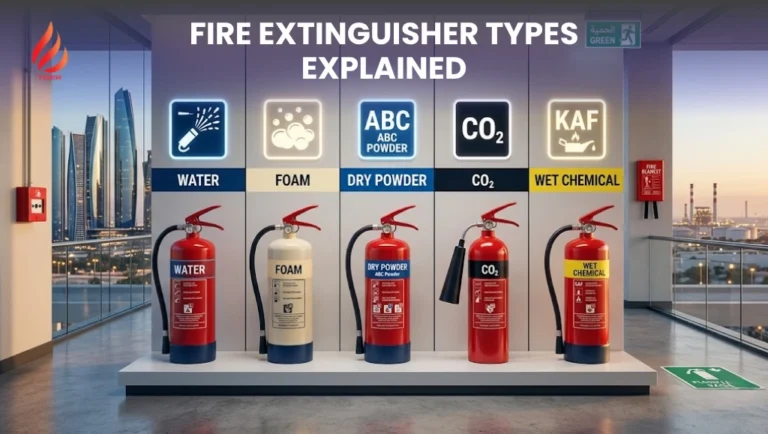
Water Fire Extinguishers: Best for Ordinary Combustible Materials
Water extinguishers are among the most widely used fire extinguishers worldwide. They work by cooling the burning material and reducing heat below the ignition point.
These extinguishers are suitable for offices, schools, residential buildings, and storage areas where the primary risk comes from paper, wood, and similar materials.
Suitable For:
- Homes
- Offices
- Schools
- Retail stores
Not Suitable For:
- Electrical fires
- Flammable liquids
- Cooking oil fires
Foam Fire Extinguishers: Ideal for Flammable Liquid Fires
Foam extinguishers are highly effective against Class A and Class B fires. They create a protective layer over flammable liquids, preventing oxygen from feeding the fire.
Many commercial and industrial facilities in Abu Dhabi use foam extinguishers because of the presence of fuels, solvents, and chemical storage areas.
Advantages:
- Effective on liquid fires
- Prevents reignition
- Easy to use
Common Locations:
- Petrol stations
- Workshops
- Industrial facilities
- Warehouses
Dry Powder Fire Extinguishers: Versatile Protection for Multiple Risks
Dry powder extinguishers are known for their versatility. They can be used on Class A, B, C, and electrical fires, making them a popular choice for industrial environments.
The powder interrupts the chemical reaction occurring during combustion, quickly suppressing flames. However, they can leave residue and reduce visibility during use.
Best For:
- Manufacturing facilities
- Construction sites
- Warehouses
- Fuel storage areas
Benefits:
- Multi-purpose protection
- Rapid fire suppression
- Suitable for gas fires
CO₂ Fire Extinguishers: Essential for Electrical Equipment
Carbon Dioxide (CO₂) extinguishers are specifically designed for electrical fires and flammable liquid fires. They extinguish fires by removing oxygen and cooling the affected area.
Because CO₂ leaves no residue, it is commonly installed in offices, data centers, and server rooms where sensitive electronic equipment must be protected.
Ideal Locations:
- Offices
- Server rooms
- Control rooms
- IT facilities
Advantages:
- No cleanup required
- Safe for electronics
- Fast suppression
Wet Chemical Fire Extinguishers: The Right Choice for Kitchens
Commercial kitchens represent one of the highest fire-risk areas in any property. Cooking oils and fats can ignite quickly and burn at extremely high temperatures.
Wet chemical extinguishers are specifically developed to tackle Class F fires. They create a cooling, soap-like layer over burning oil, preventing reignition.
Recommended For:
- Restaurants
- Hotels
- Cafeterias
- Commercial kitchens
Key Benefits:
- Designed for cooking oil fires
- Reduces flare-ups
- Improves kitchen safety
How to Choose the Right Fire Extinguisher for Your Property
The best extinguisher depends on the property’s fire risks. A residential villa requires different protection compared to an industrial warehouse or commercial kitchen.
Conducting a fire risk assessment helps identify potential hazards and determine the most appropriate extinguisher types and locations.
Property Type Recommendations:
- Homes – Water and CO₂ extinguishers
- Offices – CO₂ and Water extinguishers
- Restaurants – Wet Chemical extinguishers
- Warehouses – Foam and Dry Powder extinguishers
- Industrial Sites – Specialized fire protection systems
Fire Extinguisher Placement and Maintenance Best Practices
Installing the correct extinguisher is only the first step. Proper placement and regular maintenance are essential to ensure effectiveness during emergencies.
Fire extinguishers should be easily accessible, clearly visible, and regularly inspected by qualified professionals.
Maintenance Checklist:
- Pressure gauge inspection
- Seal verification
- Physical damage checks
- Annual servicing
- Compliance documentation
Conclusion
Understanding Fire Extinguisher Types Abu Dhabi property owners should install is vital for protecting lives, assets, and business operations. Every building has unique fire risks, and choosing the appropriate extinguisher can significantly improve emergency response capabilities.
By combining the right extinguisher types, proper placement, regular maintenance, and professional fire safety planning, Abu Dhabi property owners can create a safer environment while maintaining compliance with UAE fire protection standards.