Introduction
As businesses in Abu Dhabi continue to embrace digital transformation, server rooms and data centers have become the backbone of daily operations. From financial institutions and healthcare providers to government entities and logistics companies, organizations rely on critical IT infrastructure to store, process, and protect valuable data. While cybersecurity remains a top priority, physical threats such as fire can be equally devastating.
A fire in a server room can cause extensive equipment damage, data loss, operational downtime, and significant financial consequences. Traditional fire protection methods are often unsuitable for sensitive electronic environments because they may damage equipment while extinguishing the fire. This is why selecting the right Fire Suppression System for Server Rooms Abu Dhabi facilities is one of the most important decisions for business continuity and asset protection.
This guide explains how fire suppression systems work, the unique fire risks in server rooms, and the key factors organizations should consider when choosing the most effective solution for their facilities.
Why Server Rooms Require Specialized Fire Protection
Unlike standard office spaces, server rooms contain high-density electronic equipment that generates heat continuously. Power distribution systems, network devices, batteries, cooling equipment, and data storage infrastructure all contribute to fire risks.
Even a minor fire incident can result in:
- Data loss
- Service interruptions
- Equipment replacement costs
- Business downtime
- Reputational damage
- Regulatory consequences
Traditional water-based fire suppression methods may extinguish a fire but can also destroy expensive servers and networking equipment. Therefore, businesses need a Fire Suppression System for Server Rooms Abu Dhabi that can suppress fires quickly while minimizing damage to critical assets.
Understanding Common Fire Risks in Server Rooms
Before selecting a suppression system, it is important to identify the most common fire hazards present within server rooms and data centers.
Electrical Failures
Electrical faults remain one of the leading causes of server room fires. Overloaded circuits, damaged wiring, faulty power supplies, and short circuits can generate heat and ignition sources.
Overheating Equipment
Servers and networking devices operate continuously and produce significant heat. Cooling system failures can lead to dangerous temperature increases.
Battery Systems
UPS (Uninterruptible Power Supply) systems and backup batteries can present fire risks if damaged, improperly maintained, or exposed to excessive heat.
Human Error
Improper maintenance procedures, accidental damage, and installation errors can contribute to fire incidents.
Understanding these risks helps organizations choose a suppression system that addresses their specific operational environment.
What Is a Fire Suppression System?
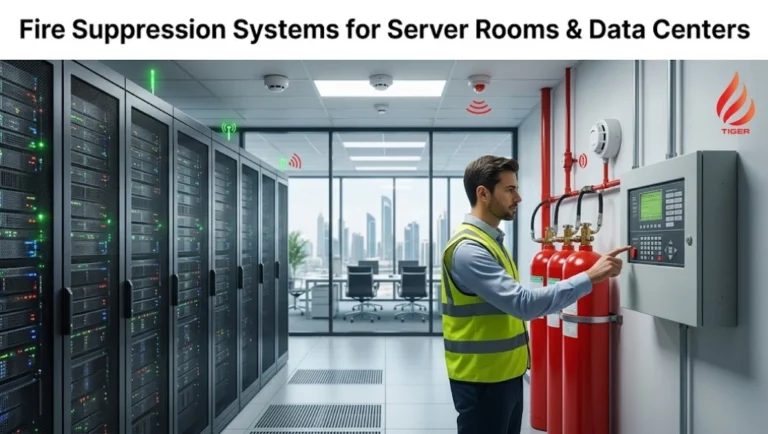
A fire suppression system is an automated fire protection solution designed to detect and extinguish fires before they spread.
Unlike portable fire extinguishers that require manual operation, suppression systems activate automatically when fire conditions are detected.
Typical System Components
- Smoke detectors
- Heat detectors
- Control panels
- Suppression agent storage cylinders
- Distribution piping
- Discharge nozzles
- Alarm systems
A properly designed Fire Suppression System for Server Rooms Abu Dhabi provides rapid fire control while protecting valuable electronic assets.
Why Traditional Sprinkler Systems Are Not Ideal
Many building fire protection systems rely on automatic sprinklers. While sprinklers are highly effective in many environments, they may not be the best solution for server rooms.
Potential Problems with Water-Based Systems
- Equipment damage
- Extended downtime
- Expensive restoration costs
- Data loss risks
- Cleanup challenges
Sensitive electronic equipment can suffer severe damage even from small amounts of water exposure.
For this reason, most modern data centers prefer clean agent suppression technologies specifically designed for electronic environments.
Types of Fire Suppression Systems for Server Rooms
There are several suppression technologies available for protecting server rooms and data centers.
Clean Agent Fire Suppression Systems
Clean agent systems are among the most widely used solutions for protecting critical IT infrastructure.
They extinguish fires using non-conductive gases that leave no residue after discharge.
Advantages
- No water damage
- No residue cleanup
- Safe for electronics
- Rapid suppression
Inert Gas Systems
Inert gas systems reduce oxygen levels within the protected area, preventing combustion without damaging equipment.
Benefits
- Environmentally friendly
- Suitable for large facilities
- No residue
Water Mist Systems
Water mist systems use extremely fine water droplets that absorb heat efficiently while minimizing water usage.
Advantages
- Reduced water damage
- Effective cooling
- Lower water consumption
Selecting the appropriate technology depends on facility size, risk profile, and operational requirements.
Factors to Consider When Choosing a Fire Suppression System
Every server room is unique, and there is no one-size-fits-all solution.
Several factors should be evaluated before selecting a Fire Suppression System for Server Rooms Abu Dhabi facilities require.
Room Size
Larger data centers may require more complex suppression systems than smaller server rooms.
Equipment Value
High-value infrastructure often justifies investing in advanced clean agent systems.
Occupancy Levels
Facilities with frequent personnel access may require suppression agents that are safe for occupied spaces.
Business Continuity Requirements
Organizations that cannot tolerate downtime should prioritize systems that minimize cleanup and recovery efforts.
Budget Considerations
Initial installation costs should be balanced against long-term operational and maintenance expenses.
Why Professional Design and Installation Matter
Server room fire protection requires specialized expertise. Incorrect system selection, poor design, or improper installation can reduce effectiveness and increase risks.
Professional fire protection specialists evaluate facility requirements and develop customized solutions based on:
Design Considerations
- Fire risks
- Room dimensions
- Equipment layout
- Airflow patterns
- Occupancy levels
- Compliance requirements
Working with experienced professionals helps ensure that the selected Fire Suppression System for Server Rooms Abu Dhabi provides optimal protection for critical infrastructure.
Proper design also improves system performance, reliability, and long-term return on investment.
Conclusion
Selecting the right Fire Suppression System for Server Rooms Abu Dhabi is essential for protecting critical IT infrastructure, business operations, and valuable data assets. Server rooms face unique fire risks that require specialized suppression technologies capable of extinguishing fires without damaging sensitive electronic equipment.
By understanding common fire hazards, evaluating available suppression technologies, implementing advanced detection systems, and maintaining equipment regularly, organizations can significantly reduce fire-related risks.
Whether operating a small server room or a large-scale data center, investing in a professionally designed fire suppression solution helps ensure business continuity, regulatory compliance, and long-term operational resilience. In today’s digital economy, protecting data infrastructure is not just a technical requirement—it is a business necessity.