
Introduction
Fire extinguishers are one of the most important first-response tools in any fire safety system. Whether installed in residential buildings, offices, warehouses, retail stores, hotels, or industrial facilities, they provide immediate protection against small fires before they escalate into major emergencies. However, simply installing fire extinguishers is not enough. Property owners must ensure that every extinguisher remains fully functional and ready for use at all times.
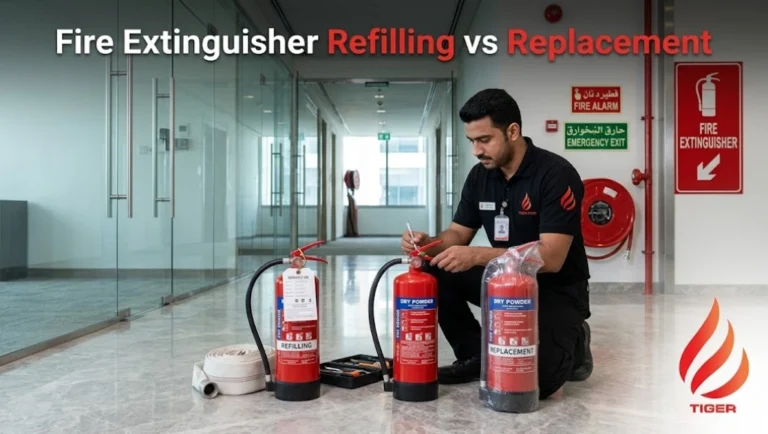
One of the most common questions asked by building owners and facility managers is whether a fire extinguisher should be refilled or completely replaced after use, inspection, or aging. Understanding Fire Extinguisher Refilling vs Replacement Abu Dhabi requirements can help businesses and property owners maintain compliance, reduce risks, and optimize maintenance costs.
This guide explains the differences between refilling and replacing fire extinguishers, common inspection findings, maintenance best practices, and how to determine the most cost-effective and safe option for your property.
Why Fire Extinguisher Maintenance Is Critical
Fire extinguishers are designed to operate instantly during emergencies. If an extinguisher fails when needed, the consequences can be severe, including property damage, injuries, and business interruptions.
Regular inspections and maintenance ensure that extinguishers remain pressurized, undamaged, and capable of performing as intended. Proper maintenance also helps identify units that require refilling or replacement before an emergency occurs.
Benefits of Regular Maintenance
- Improved fire safety readiness
- Reduced equipment failure risks
- Extended extinguisher lifespan
- Better compliance with safety requirements
- Lower long-term maintenance costs
Understanding Fire Extinguisher Refilling vs Replacement Abu Dhabi practices is an essential part of every fire safety program.
What Is Fire Extinguisher Refilling?
Fire extinguisher refilling refers to the process of recharging an extinguisher after it has been partially or fully discharged. During refilling, the extinguishing agent is replenished, and the unit is restored to its required operating pressure.
The process typically includes:
Refilling Procedures
- Emptying any remaining extinguishing agent
- Internal inspection of the cylinder
- Cleaning and servicing components
- Refilling with the appropriate agent
- Re-pressurizing the extinguisher
- Testing for leaks and proper operation
Refilling allows serviceable extinguishers to continue functioning safely without requiring complete replacement.
What Is Fire Extinguisher Replacement?
Replacement involves removing an existing extinguisher from service and installing a new unit in its place.
While refilling can restore many extinguishers, some units become unsuitable for continued use due to age, damage, corrosion, or failed inspections.
Common Reasons for Replacement
- Severe cylinder damage
- Corrosion or rust
- Failed pressure tests
- Obsolete equipment
- Missing parts
- Repeated maintenance issues
In such situations, replacement is often the safest and most practical solution.
When Should Fire Extinguishers Be Refilled?
Many property owners assume extinguishers only require refilling after a fire incident. However, even a small discharge can reduce effectiveness and necessitate servicing.
Situations Requiring Refilling
After Use
Any extinguisher that has been discharged should be inspected and recharged immediately, regardless of how little agent was released.
Low Pressure Readings
Pressure gauges indicating low pressure often suggest that the extinguisher requires servicing or recharging.
Scheduled Maintenance
Certain extinguisher types require periodic servicing as part of routine maintenance programs.
Benefits of Refilling
- Lower cost than replacement
- Extended equipment lifespan
- Reduced waste
- Faster restoration of protection
For many facilities, refilling is a cost-effective approach when the extinguisher remains structurally sound.
When Should Fire Extinguishers Be Replaced?
Although refilling can restore many extinguishers, there are situations where replacement becomes necessary.
A damaged or deteriorated extinguisher may not provide reliable protection, even if it can technically be recharged.
Signs That Replacement May Be Necessary
Physical Damage
Dents, cracks, bent handles, or damaged valves can compromise extinguisher performance.
Corrosion
Rust and corrosion weaken the cylinder and increase the risk of failure.
Expired Equipment
Older extinguishers may no longer meet current safety requirements or manufacturer recommendations.
Failed Inspections
If an extinguisher fails hydrostatic testing or other critical evaluations, replacement is often required.
When safety is in question, replacement is generally the preferred option.
Cost Comparison: Refilling vs Replacement
One of the key factors influencing maintenance decisions is cost.
Refilling is often less expensive because it utilizes the existing cylinder and hardware. However, repeated repairs on an aging extinguisher can eventually become more costly than replacing the unit altogether.
Refilling Advantages
- Lower upfront expense
- Minimal disruption
- Environmentally friendly
- Suitable for newer extinguishers
Replacement Advantages
- Brand-new equipment
- Updated technology
- Reduced maintenance concerns
- Improved long-term reliability
Property owners should evaluate both short-term and long-term costs when deciding between refilling and replacement.
Different Extinguisher Types and Maintenance Considerations
Water Extinguishers
Typically require periodic inspections and refilling after use.Foam Extinguishers
May require replacement of extinguishing agents during scheduled servicing.Dry Powder Extinguishers
Require regular checks for powder compaction and pressure levels.CO₂ Extinguishers
Need weight verification and valve inspections.Wet Chemical Extinguishers
Require specialized maintenance due to their application in kitchen environments.Understanding extinguisher-specific maintenance needs helps property owners make informed decisions regarding refilling or replacement.How Professional Maintenance Supports Compliance and Safety
Professional fire extinguisher servicing goes beyond simple visual inspections. Experienced technicians perform detailed evaluations, testing, and maintenance procedures that help ensure optimal performance.
Benefits of Professional Maintenance
- Comprehensive inspections
- Accurate pressure testing
- Proper refilling procedures
- Compliance support
- Improved equipment reliability
Property owners who invest in professional maintenance programs often experience fewer equipment failures and better overall fire safety performance.
A proactive approach to Fire Extinguisher Refilling vs Replacement Abu Dhabi decisions helps ensure that fire protection systems remain fully operational when needed most.
Conclusion
Understanding Fire Extinguisher Refilling vs Replacement Abu Dhabi requirements is essential for maintaining a safe and compliant property. While refilling is often a practical and cost-effective solution for serviceable extinguishers, replacement becomes necessary when equipment shows signs of damage, corrosion, aging, or failed inspections.
The decision should always prioritize safety, reliability, and long-term performance. Regular inspections, professional maintenance, and proper record-keeping can help property owners determine the most appropriate course of action for each extinguisher.
By adopting a proactive maintenance strategy, Abu Dhabi property owners can improve fire safety readiness, protect occupants and assets, and ensure that their fire extinguishers remain ready to perform during emergencies.